Ospentos is a neutral handling partner and trusted service provider for airlines as well as the freight forwarding industry.
Founded in 2006, Ospentos operates its own air cargo terminal at Tallinn International Airport in Estonia and manages an extensive road feeder service network across the greater Baltic region. This network connects the airports of Helsinki, Tallinn, Riga, Vilnius, and Warsaw almost daily, and sometimes even further.
Ospentos’ crew loading cargo onto an aircraft
When Ospentos first started its operations, one of the biggest challenges was choosing the right IT software:
“We needed a solution that could handle both terminal operations and the critical customs processes as efficiently as possible,” explains Valter Veedler, the CEO of Ospentos.
Valter began his career in aviation in 2002, holding positions in freight forwarding and ground handling. For the past eight years, he has brought that expertise to Ospentos International.
As Qstep’s very first client, Ospentos played a pivotal role in shaping the platform. Over the years, this partnership has driven innovation on both sides, with the two companies growing in parallel and learning from each other as they matured in the industry.
“Being Qstep’s first client gave us a significant advantage,” Valter recalls. “In the early days, any change we needed could be requested and implemented within the hour. Qstep has grown considerably since then, so naturally that level of personalization is no longer possible.”
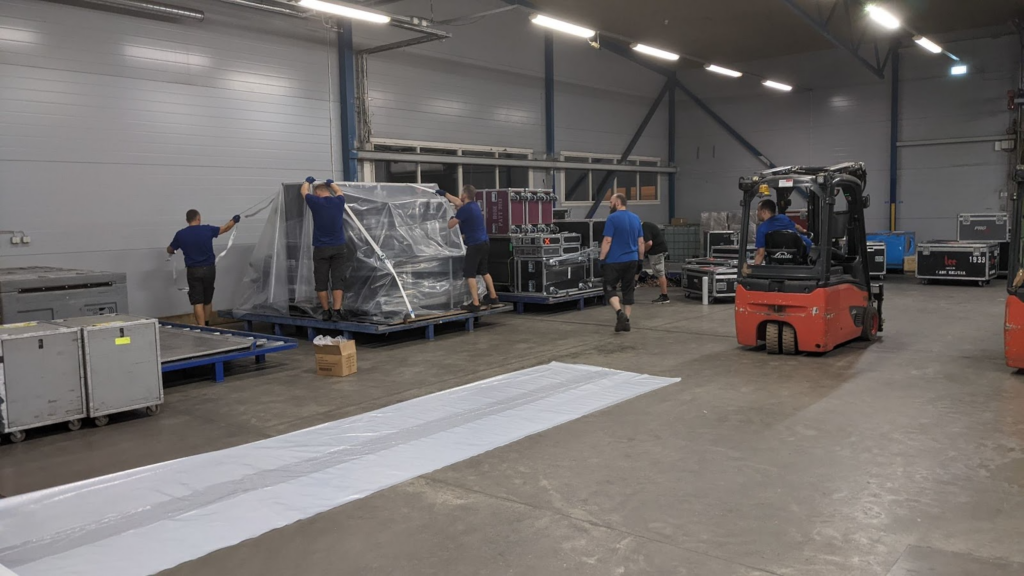
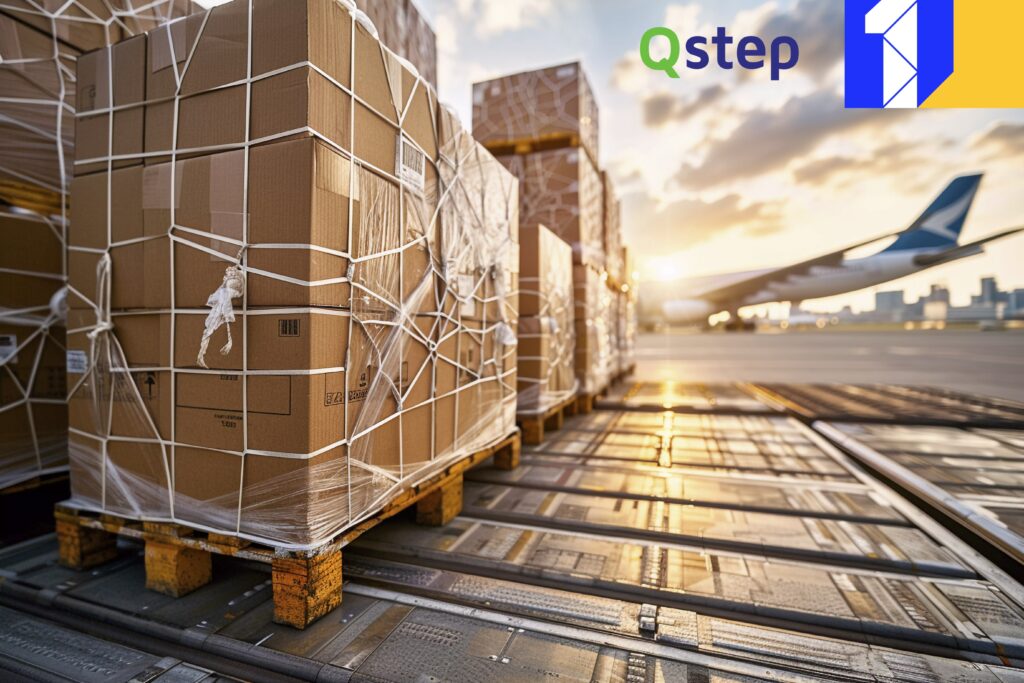
Ospentos cargo terminal staff wrapping and palletizing air cargo
The Pillars of Efficiency
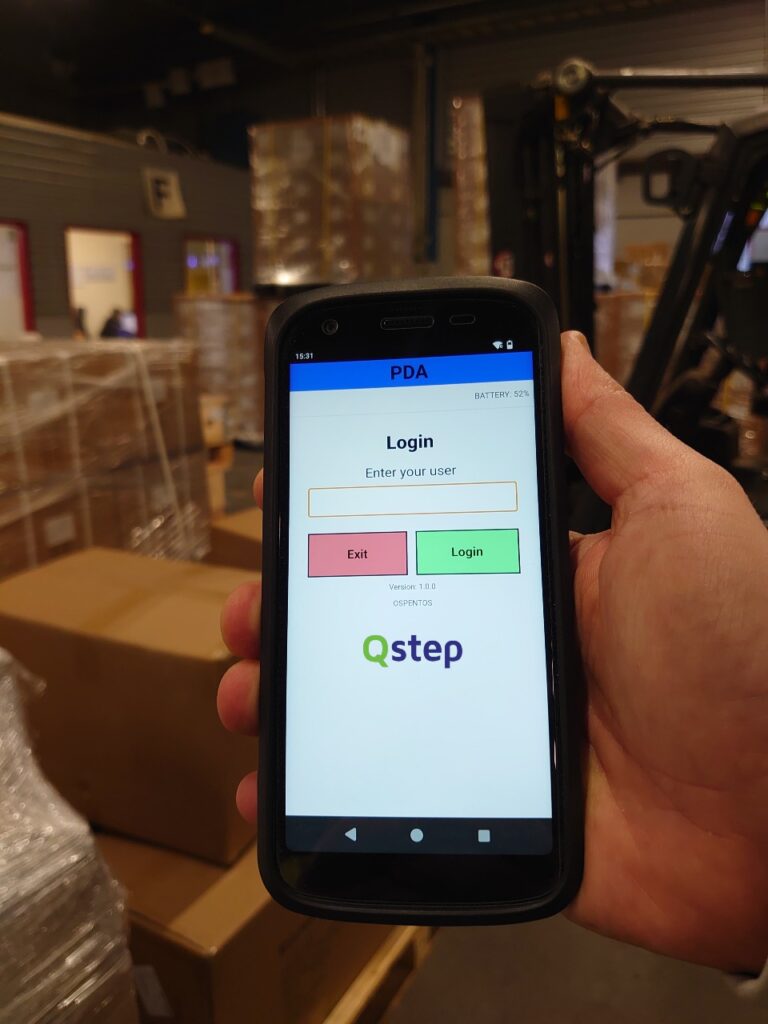
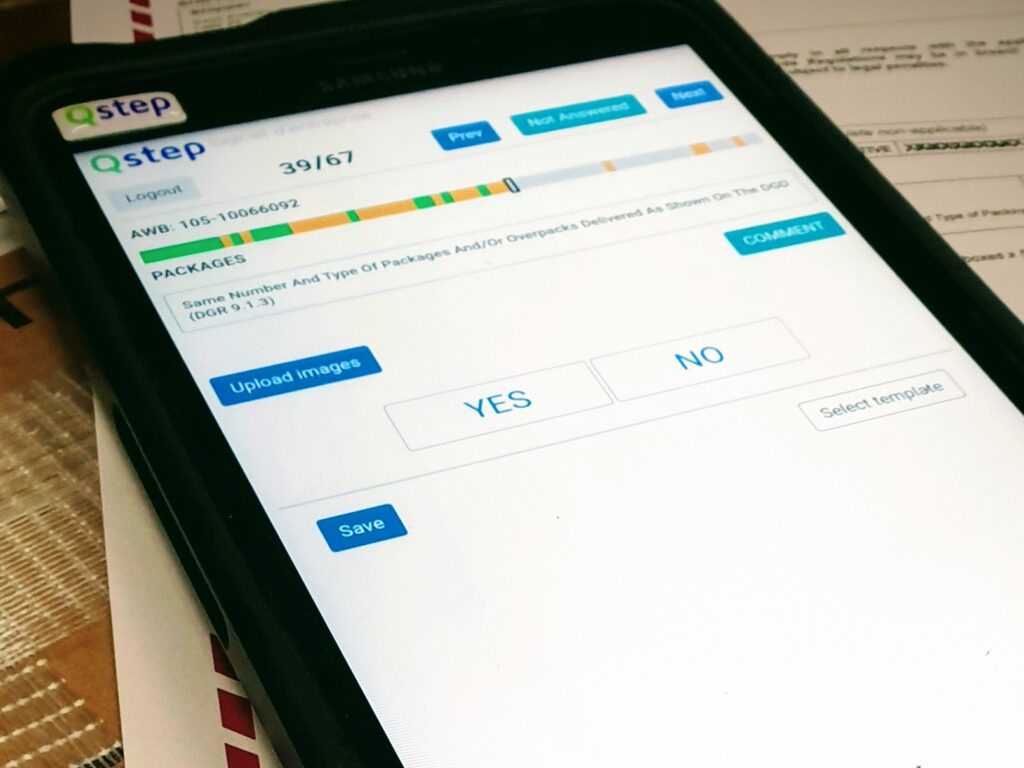
“With Qstep, the physical handling of air freight shipments is as efficient as possible,” says Valter. “Staff handling the shipments use portable Android-based PDAs, allowing them to work on the move. At the same time, information such as import arrival notices and export cargo receipts is exchanged with forwarding agents automatically in real time — no calls, no emails. This approach significantly improves overall efficiency.”
Alongside efficient physical handling, Qstep operates on two key pillars that drive its performance:
“The first pillar is integration with airlines and carriers through standard message exchanges, such as Cargo IMP messages, which are automatically processed in our system,” Valter points out.
“The second pillar applies the same approach to customs authorities, exchanging shipment and customs document data electronically with the customs system. This eliminates the need to handle paper documents manually. Managing everything through electronic message exchange has been key to maximizing both efficiency and effectiveness.”
By digitizing and automating communication at every step, Qstep ensures that data is accurate, instant, and actionable.
“The only challenge we face is that customs constantly update their platforms, so we have to keep up. Over the years, Qstep has adapted to stay in sync with these changes, though sometimes we’re just trying to chase their pace. I hope things stabilize in the future, as this would further improve efficiency with customs,” Valter concludes.
Minimal Manual Input
One of Qstep’s greatest strengths lies in its ability to reduce manual input and unnecessary, time-consuming administrative work:
“By automating message exchanges with airlines, carriers, freight forwarders, and especially customs systems, the platform streamlines operations at every step,” Valter explains. “These advantages have defined Qstep from the start and continue to fuel its success today.”
Optimized Resource Utilization
Qstep’s efficiency translates directly into measurable resource savings. Terminals can handle higher cargo volumes with fewer staff, maximizing throughput while minimizing operational costs.
He continues: “The forklift doesn’t drive faster because of the software. It’s all about minimizing manual administration, paperwork, and customs procedures. This is where Qstep plays a crucial role, streamlining back office processes and ensuring everything runs as efficiently as possible.”
Accurate Data in Real Time
From the moment a shipment arrives at the terminal, access to accurate, real-time information makes all the difference:
“As soon as a shipment is received and accepted into our terminal, the forwarding agent is immediately notified. They receive an electronic cargo receipt via email with the exact weights and dimensions. This means that the forwarders have accurate information on their screen the moment the truck arrives — no calls, no paperwork, no follow-ups required,” Valter says. ”Everything is available instantly and correctly.”
Transparency lies at the heart of these operations. It allows fast decision-making, smooth workflows, and confidence that cargo is in safe hands.
“Occasionally, shipments have damages or shortages. In such cases, the forwarding agent immediately receives a discrepancy report with missing quantities and the extent of any damages, including photos showing the shipment’s condition,” Valter explains.
He continues: “Checklists for outgoing dangerous goods are another example. Many years ago, we handled everything on paper, manually ticking boxes. Today, the process is fully electronic, so freight forwarders can access the information instantly as soon as a check is completed.”
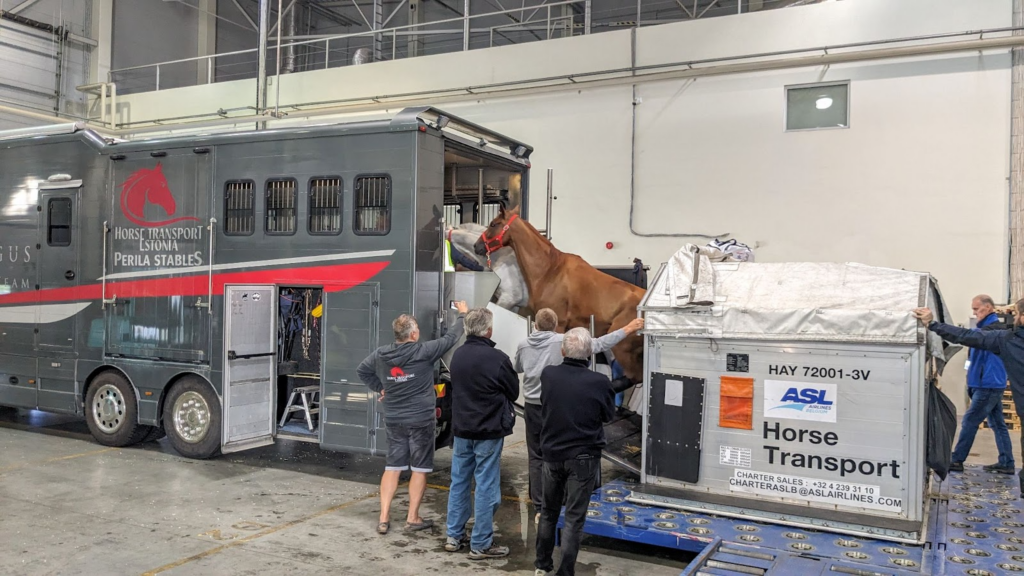
Handlers unloading a horse from a special ULD in Ospentos’ cargo terminal.
Streamlined Processes, Happier Teams
By equipping employees with the right tools and implementing streamlined workflows, Qstep enables teams to work more efficiently and effectively. This not only allows employees to focus on high-value tasks but also reduces frustration and manual effort while boosting satisfaction.
“Employees coming from other companies are often pleasantly surprised by our automated processes and IT setup,” Valter notes. “I can confirm that when they join us in similar roles, they immediately notice these differences, and that has a positive impact on their overall job satisfaction.”
Room for Improvement
While the platform has proven highly effective, there’s opportunity for growth, particularly when it comes to communication around updates.
“One area where there’s room for development is communication, to ensure users are always in the loop. There’s sometimes a lack of clarity when new developments are rolled out in Qstep. It’s not always obvious what has been updated, upgraded, or added as a new feature,” Valter explains. ”A simple overview or a clear ‘what’s new’ list would make it much easier to understand what’s being developed or fixed.”
He adds: Having that clarity would help avoid surprises, and it’s something Qstep could consider improving to make updates much easier for users to follow.”
A Platform That Changed the Game
From the earliest days of manually handled checklists and paper forms to today’s fully digital operations, Qstep has transformed how Ospentos manages cargo, mail, and eCommerce shipments.
By combining efficient physical handling with real-time digital integration, Qstep has created a system that is not only efficient but also reliable, transparent, and scalable. Qstep is more than just software, it’s the engine that drives Ospentos’ success and sets a benchmark for the industry.
The wait is over—the Qstep PDA app is now available on Android. This milestone brings greater flexibility, wider accessibility, and the same powerful Qstep experience to Android devices for our air cargo handling clients across all the markets we are live in. Throughout 2025, our teams have worked relentlessly to make this launch happen. As…
As the air cargo industry observes more and more IATA ONE Record data sharing pilots demonstrating their operational prowess; and with airlines´ recent commitment to building ONE Record capability by January 2026, the age of new and multiple data communication standards in air cargo is closer than ever. Since the launch of International Air Transport…
From November 5th, 2022 entry customs procedures for air cargo from 3rd countries and transited via EU airport, will be processed in Finland´s new customs electronic system UTU. On October 12, following successful completion of testing, Qstep is confirmed to be compliant for lodging TSD (Temporary Storage Declaration) and PN (Presentation Notification) to UTU. “UTU…
Qstep added a new feature to its software platform for cargo ground handlers. Notification to Captain (NOTOC) is an essential document to provide correct information to the airline captain about special cargo to be loaded on board the flight, be it dangerous goods (DGR) or live animals (AVI) to ensure flight safety and proper handling….
Export air cargo shipments often contain dangerous goods, which always need to be checked by the cargo handler before accepting it for the flight in accordance with IATA Dangerous Goods regulation (DGR). The old school practice has been to pull standard or airline-specific paper version DG check-list and start putting pen to paper – a…
This website uses cookies so that we can provide you with the best user experience possible. Cookie information is stored in your browser and performs functions such as recognising you when you return to our website and helping our team to understand which sections of the website you find most interesting and useful.
Strictly Necessary Cookies
Strictly Necessary Cookie should be enabled at all times so that we can save your preferences for cookie settings.
If you disable this cookie, we will not be able to save your preferences. This means that every time you visit this website you will need to enable or disable cookies again.